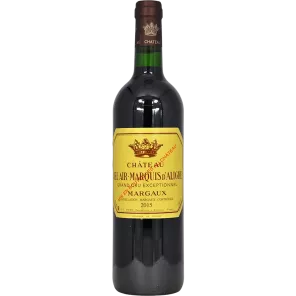
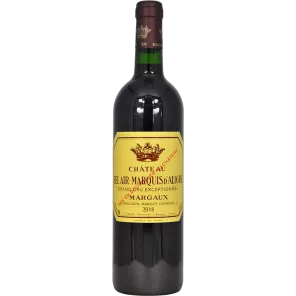
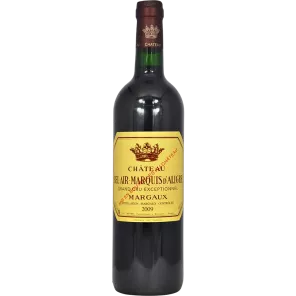
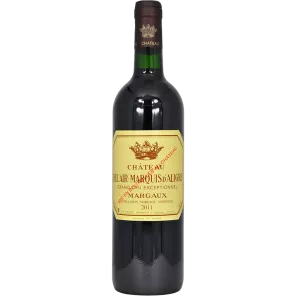
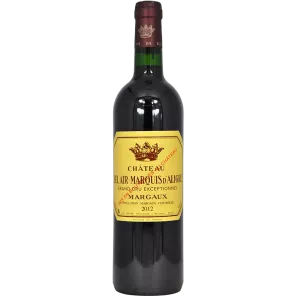
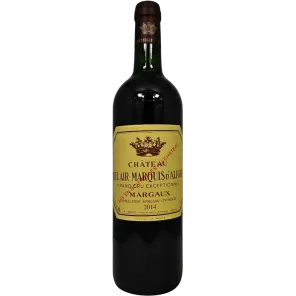
In the world-renowned realm of Bordeaux wines, Château Bel Air Marquis d'Aligre—or “BAMA” to those in the know—stands out as an exception. Nestled in Soussans, in the heart of the Margaux appellation, this historic château embodies a rare uniqueness, driven by one man, Jean-Pierre Boyer, and his unwavering commitment to traditional methods. Here, far from passing fads and mass-produced cuvées, time is measured in decades, and the wines are crafted as works of patience.
A History Beyond the Classifications
The history of Château Bel Air Marquis d’Aligre dates back several centuries, but it was in the 19th century that the estate took on the name by which we know it today. It could have been included in the famous 1855 classification, but the Marquis d’Aligre, then the owner, chose not to submit his wines to the wine brokers. This principled decision deprived the wine estate of official recognition, but not of its prestige.
It was not until 1932 that Château Bel Air was finally recognized as a Cru Bourgeois Exceptionnel, a distinction it still proudly bears. Since 1950, the Boyer family has overseen the wine estate’s destiny. Today, Jean-Pierre Boyer, a solitary and uncompromising winemaker, carries on this legacy with almost monastic rigor. At over 90 years old, he has already overseen more than 70 harvests, without ever succumbing to the allure of modernity.
A philosophy of discretion and purity
Jean-Pierre Boyer cultivates 13 hectares of vineyards, some of which—over 80 years old—are still ungrafted —a true viticultural treasure. The vineyard is situated on gravelly and clay-limestone soils typical of the Margaux appellation, which promote deep root growth and slow ripening of the berries. The grape varieties stand out in the Margaux landscape: Merlot, Cabernet Franc, Cabernet Sauvignon, and a touch of Petit Verdot, all expressed at their finest.
Vineyard management is carried out the old-fashioned way, with deep respect for the plants and all living things. Here, there are no herbicides or unnecessary synthetic products. The harvest is done by hand, meticulously, and winemaking remains faithful to traditional techniques.
In the cellar, Jean-Pierre Boyer has made the rare choice to age all his wines exclusively in concrete cuves, completely eschewing wood. The grapes, sometimes vinified as whole clusters, ferment naturally with their indigenous yeasts, without forced extraction, fining, or filtration prior to bottling. The result: red wines with a strong identity and a silky texture, characterized by the elegance of the fruit and the depth of the terroir.
The wine estate releases only vintages that have already aged in the cellar for several years—often more than ten. This is an extremely rare practice in Bordeaux, but one that defines the signature style of Château Bel Air Marquis d’Aligre.
Cuvées with aging potential that defy convention
The estate’s iconic cuvées trace a chapter of Margaux’s history, vintage after vintage. The 1995 Margaux displays tertiary aromas of great nobility, while the 1998 combines structure and finesse. The 2055 vintage, marked by a sunny character, expresses itself with power and surprising freshness. The 2010 Margaux, for its part, embodies one of the wine estates’ finest wines, balancing density with mineral energy.
The 2011 vintage already shines with its floral delicacy and fine texture, while the 2015, still young, promises exceptional aging potential. Finally, the 2018 Margaux, the latest vintage released, confirms this exceptional wine estate’s ability to produce soulful wines—without artifice—in a style that is inimitable in Bordeaux.
A timeless creation at the heart of Margaux
Rejecting new oak barrels, marketing classifications, and standardization, BAMA appeals to discerning wine lovers—those who seek more from wine than mere technical prowess: a memory, a breath of life, a soul.
This Margaux icon is not merely a wine estate, but a lesson in humility and fidelity to a vision of Bordeaux that has vanished elsewhere. And perhaps that is precisely what makes every bottle of Château Bel Air so precious. Bucking prevailing trends, Château Bel Air Marquis d’Aligre stands as a monument, and Jean-Pierre Boyer as an unyielding figure. Or is it the other way around?
 en / €
 Contact