en / €
 Contact


- Biodynamie
- Biodynamie : from organic farming
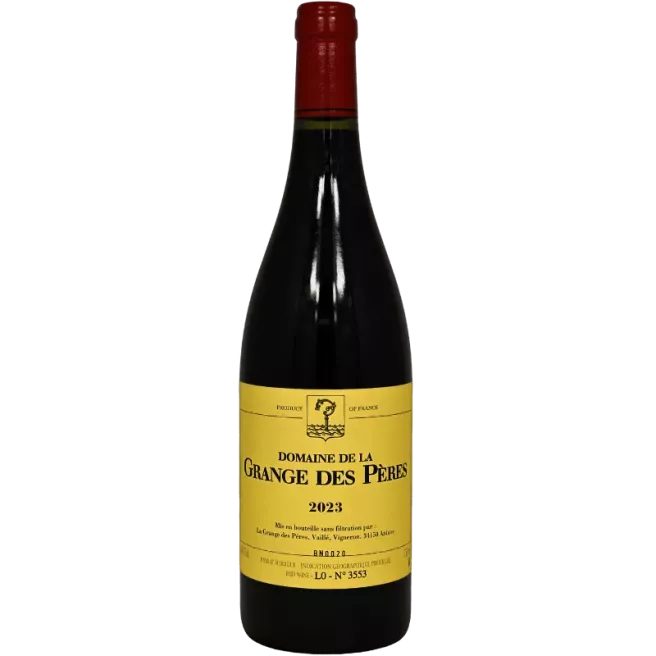
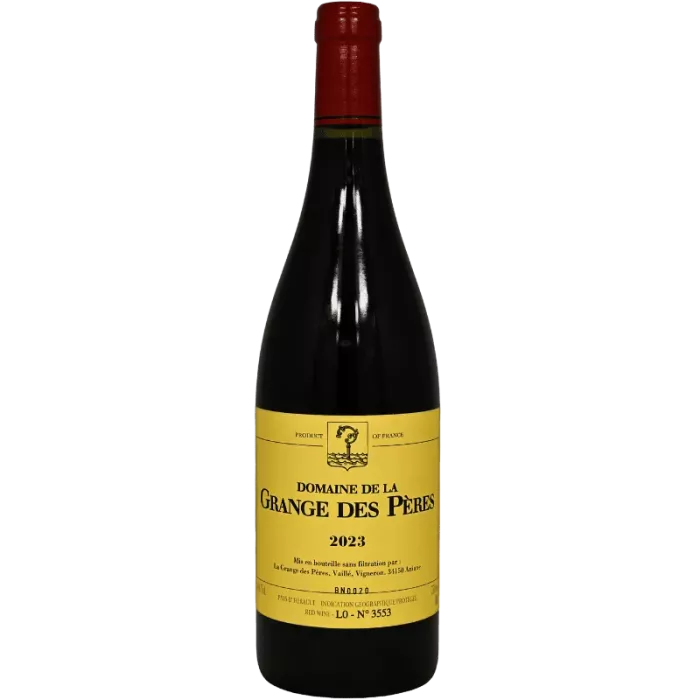
La Grange des Pères 2023 | Languedoc
This great Languedoc wine, made from Syrah, Mourvèdre, Cabernet Sauvignon, and Counoise grown on rounded limestone pebbles in Aniane, reveals—after 24 months in barrels —a silky texture with notes of stewed fruit and enchanting aromas of licorice and garrigue. A rare gem of an artisanal wine with excellent aging potential, which Mundovin is fortunate to offer.
With cumulative purchases of €800 or more over the course of a year, you gain access to the Mundovin Club
.svg)
Premium packaging
Your wine travels protected
.svg)
Fast delivery
Customized service

Loyalty and rewards
A tailored loyalty programme
Technical Specifications
Capacity
75cl
Vintage
2023
Grape variety(ies)
Syrah, Mourvèdre, Cabernet Sauvignon, Counoise
Name
Pays d'Hérault
Winemaking
Hand harvest, each grape variety is fermented separately with native yeasts; blended before ageing
Livestock farming
24 months in barrels
Philosophy and Style
Type of wine
Red
Crop type
Non-certified biodynamics
Style
Full-bodied and powerful
Type of soil
Worn pebbles and limestone scree
Tasting
Food Recommendations
Duck breast in a cocoa crust, served with Melanosporum truffle mashed potatoes and a full-bodied blackberry sauce
Serving Suggestions
17°C, decant for at least 2 hours
High point
2034–2048
La Grange des Pères 2023
La Grange des Pères is one of the few wineries in Languedoc-Roussillon to have made a name for itself without the backing of a prestigious appellation. It all hinges on the vision of one man: Laurent Vaillé, a winemakerfrom Aniane who passed away suddenly in April 2021. Trained under Eloi Dürrbach, Jean-François Coche-Dury, and Gérard Chave, he chose these Hérault hillsides against the grain, at a time when no one was seeking finesse there. His brother Bernard Vaillé now carries on the legacy, vintage after vintage, without compromising. This 2023 is the latest incarnation of the wine estate’s historic cuvée, whose first vintage dates back to 1992.
Terroir and Grape Varieties
The vineyards are located on the slopes of the Arboussas massif, at an elevation of between 250 and 300 meters, in the locality known as Le Tourtou. The clay-limestone soils, dotted with rounded pebbles and limestone scree, are poor, highly well-drained, and required a tremendous amount of work to make them cultivable. The winds of the Cévennes constantly sweep across the wine estate. They slow the ripening process, preserve freshness, and give the grapes a crisp profile that the sun alone could never have produced.
The blend combines Syrah, Mourvèdre, Cabernet Sauvignon, and a touch of Counoise. This choice, deliberately at odds with local regulations, classifies the wine as IGP Pays d’Hérault: a freedom we have claimed, not a constraint we have endured. The Syrah contributes body and peppery notes; the Mourvèdre, an animal-like depth; the Cabernet, structure and integrity; and the Counoise, that almost imperceptible touch of freshness that lengthens the finish.
Viticulture and Winemaking
Across the wine estate’s 11 hectares, viticulture follows biodynamic principles, though without official certification. The grapes are harvested by hand, variety by variety, with yields ranging from 20 to 25 hectoliters per hectare: a nearly monastic discipline. Each variety ferments separately in stainless-steel tanks, using only its indigenous yeasts, during a long maceration. Blending takes place before ageing. The wine then spends 24 months in barrels, one-third of which are new oak—just enough to add structure without overpowering the wine. Bottling is done without fining or filtration.
La Grange des Pères 2023: The Sommelier’s Opinion
Philippe Mischler, sommelier at Mundovin
This wine has moved me ever since I first tasted it in the first vintage. La Grange des Pères is one of the Languedoc reds that, on its own, justifies rethinking our perception of this region. For this 2023 vintage, the window of peak drinking extends from 2034 to 2048: there’s no rush. I recommend decanting at least two to four hours before serving, at 17°C, to allow the wine to fully open up. Connoisseurs who give in to impatience too soon will miss out on the essence of the wine.
The Nose
The nose opens with well-ripened red and black fruits, ranging from stewed blackberries to morello cherries. Notes of licorice and mild spices creep in. The Mediterranean garrigue is present, subtle yet persistent. As it breathes, a hint of truffle emerges in the background, a sign of a wine that’s already dense but has only just begun to reveal itself.
Palate
On the palate, the attack is clean and immediately full-bodied. Silky, well-integrated tannins support a rich, straightforward structure without any heaviness. The stewed fruit notes from the nose reappear, complemented by licorice, tapenade, and a very subtle hint of animal character. The acidity keeps everything in balance. The finish is long and silky, with that limestone freshness that characterizes the Aniane terroir and prevents the wine from ever veering into southern excess.
IGP Pays d’Hérault: An Appellation of Freedom
The IGP Pays d’Hérault covers a vast area of the Hérault region, on varied soils ranging from clay-limestone to rounded pebbles. It allows for flexibility in the choice of grape varieties that the surrounding AOCs do not permit. It is precisely this flexibility that has allowed Laurent Vaillé to incorporate Cabernet Sauvignon into his blend without compromising either his terroir or his high standards.
La Grange des Pères is the most frequently cited example of what this appellation can produce when a winemaker treats it as a tool for freedom rather than a step down. The wine is not classified as IGP by default: it is so by choice, and that choice lies at the heart of its identity.