Grande Champagne Napoleon Cognac | Dudognon
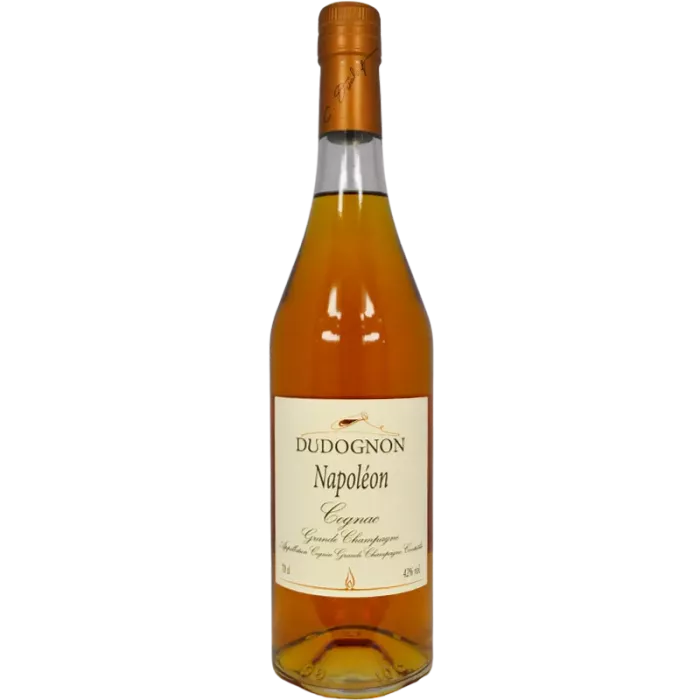
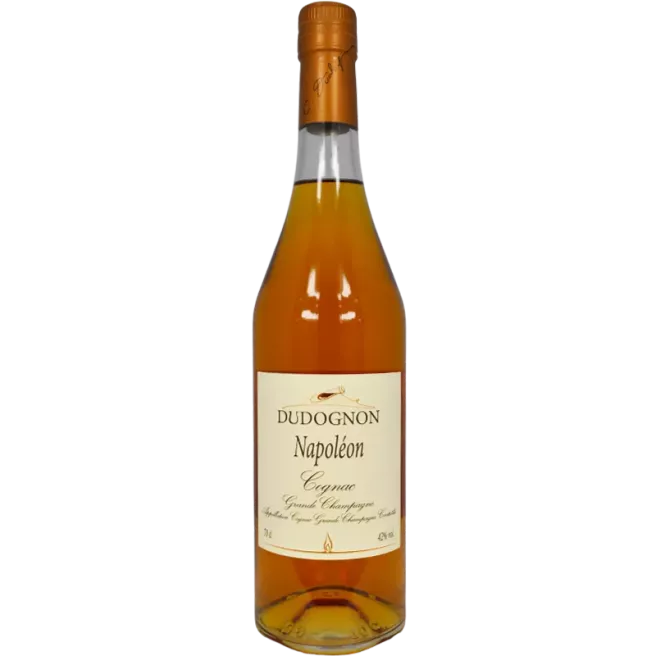
Dudognon’s Grande Champagne Napoleon Cognac is one of those spirits that tells a story. Established in 1776 in Lignières-Sonneville, this family-owned Grande Champagne house cultivates a vineyard where several generations have succeeded one another in a spirit of tradition that they proudly uphold.
Terroir and Grape Varieties
Grande Champagne refers to the limestone heart of the Cognac wine region. This deep, well-drained chalky soil is the most prized in the appellation. It imparts a finesse and length to the eaux-de-vie that other crus achieve only exceptionally. The vineyard is 90% Ugni Blanc, the benchmark grape variety in Cognac, complemented by 10% local varieties, including Montils. Ugni Blanc provides high natural acidity, which is essential for distillation. The rarer Montils grape contributes to the blend’s aromatic complexity.
Winemaking and Ageing
Fermentation takes place using only the grapes’ natural yeasts, without any external inoculation. Distillation follows the traditional Charente method: a double distillation in a pot still over a wood fire. No aromas or colorants are added. Napoléon is a blend of brandies aged 12 to 15 years, matured in Limousin oak barrels for a minimum of 15 years, including 6 to 8 months in new barrels. No sugar, no artificial oak flavoring, and no caramel: the amber color and smoothness come from aging alone. The alcohol content is gradually reduced before bottling.
Grande Champagne Napoleon Cognac | Dudognon: The Sommelier’s Review
Philippe Mischler, sommelier at Mundovin
Dudognon’s Napoleon is an excellent introduction for anyone looking to discover the house’s Cognacs. After fifteen years in Limousin oak barrels and a distillation process free of additives and colorants, what you hold in your glass is the pure expression of a Grande Champagne Cognac, crafted without artifice for generations. It is best served at 18 °C in a tulip-shaped glass that concentrates the aromas. A dessert featuring mirabelle plums and dried fruits makes the perfect pairing, where the fruit’s tangy roundness complements the sweetness of the Cognac perfectly.
The Nose
The nose opens with notes of dried fruit, candied apricot, and ripe quince. This is followed by a delicate, fleeting hint of vine blossom. Time spent in the barrel imparts nuances of natural vanilla and beeswax. In the background, a subtle note of blond tobacco signals the maturity of the blend. The overall impression remains light and airy, without any heaviness.
Palate
On the palate, the attack is supple and generous. The body is full, supported by a beautiful roundness resulting from the long ageing. The natural acidity of the Ugni Blanc provides structure without any dryness. The finish lingers with notes of candied fruit and sweet spices, offering a clean, persistent aftertaste. The absence of added sugar allows the terroir to express itself fully through to the very end.
Grande Champagne: Everything You Need to Know About This Appellation
Grande Champagne is one of the Cognac appellations. It lies in the heart of the Charente region, around the town of Éguzon and neighboring communities, including Lignières-Sonneville. Its soil is distinctive: a soft, porous white chalk that local winemakers call “Champagne” because of its color. This limestone substrate promotes slow grape ripening and high natural acidity—two ideal conditions for producing eaux-de-vie of great finesse. Cognacs from this cru are renowned for their long finish, complex bouquet, and ability to age for extended periods.
 Contact
 en / €

.svg)
.svg)