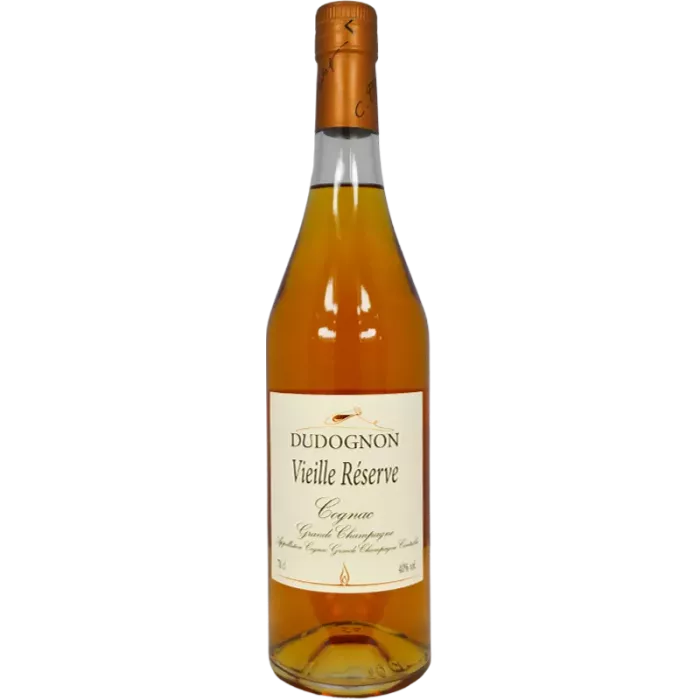
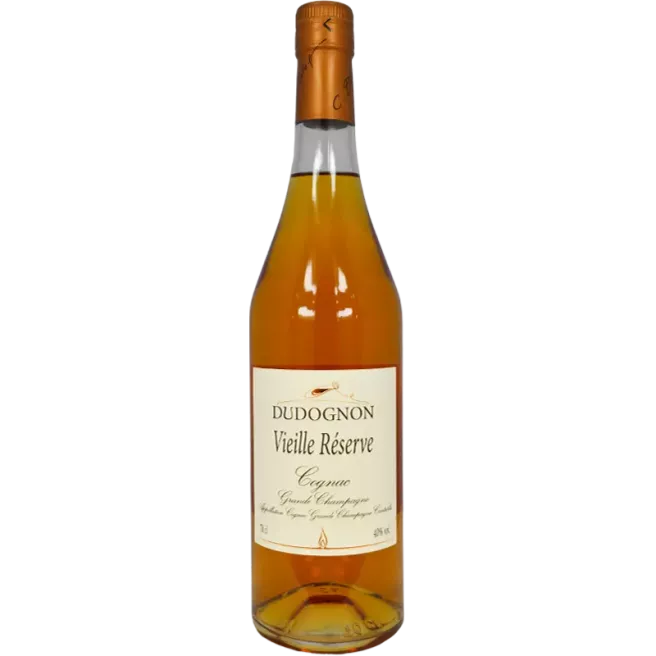
Grande Champagne Vieille Réserve Cognac | Dudognon
The Dudognon House, founded in 1776 in Lignières-Sonneville, is one of the few winemakers and producers in the region to oversee every stage of Cognac production themselves, from the vineyards to bottling. Under the leadership of Claudine Dudognon-Buraud, the house upholds an uncompromising philosophy: no colorants, no sugar syrup, and no added oak. This Grande Champagne Vieille Réserve Cognac is an ideal—and anything but unremarkable—introduction to the wine estate’s collection of aged Cognacs.
Terroir and Grape Varieties
Grande Champagne is the most prestigious of the Cognac appellations. Its limestone soils, among the poorest and most well-drained in the region, force the vines to draw water from deep underground. It is this underground tension that gives the eaux-de-vie their finesse and their exceptional aging potential. The grape variety grown here is exclusivelyUgni Blanc, which is naturally acidic, not very expressive as a wine but ideal for distillation: it produces clean, light eaux-de-vie that slowly unfold in oak.
Distillation and Ageing
Distillation follows the Charente tradition in its purest form, with a double distillation in a still heated by charcoal and wood. The brandy is then transferred to Limousin oak barrels: new barrels for about eight months to set the initial tannins, followed by older barrels to refine the body and aromas. This final stage lasts at least twenty years. A gradual dilution with distilled water precedes bottling and serves to preserve the balance of the spirit.
Grande Champagne Vieille Réserve Cognac | Dudognon: The Sommelier’s Review
Philippe Mischler, sommelier at Mundovin
In the world of Cognac, twenty years of ageing marks a threshold. This is when the rancio aromas begin to emerge, and the fruit gradually gives way to something deeper. Dudognon has the wisdom not to mask anything: no caramel, no artificial woodiness. What you have in your glass is the terroir of Grande Champagne and time—nothing else. For those seeking an authentic Cognac, built on patience rather than artifice, this Vieille Réserve is a benchmark in its price range. Serve in a tulip glass, at room temperature, and savor it slowly.
The Nose
The nose opens with a floral expression at first, delicate and lingering. Then come the sweetness of vanilla and poached pear. Notes of forest floor and dried vine shoots add a tertiary dimension expected at this age. The first hints of rancio (that oxidative character unique to aged Cognacs, somewhere between fresh nuts and noble rancid oil) begin to emerge in the background. The whole remains light and airy, never heavy.
On the palate
On the palate, the attack reveals the sweetness of ripe, almost candied fruit. The texture is smooth and velvety, with that caressing richness that only long barrel ageing can produce. The balance between sweetness and liveliness comes from the terroir: the limestone of Grande Champagne maintains a certain firmness in the background. The finish stretches out with great length, allowing notes of vanilla and rancio to linger.
Grande Champagne: The Excellence of Cognac
Grande Champagne refers to the central zone of the Cognac appellation, in the heart of the Charente department. Its chalky limestone soils, comparable in their nutrient-poverty to the great wheat-growing lands of Champagne (hence the name), produce eaux-de-vie of remarkable finesse and lightness. The Ugni Blanc grape thrives here, with a natural acidity that supports aging over decades. It is the appellation most sought after by négociants for their aged blends. Dudognon has been rooted here for over two centuries. La Vieille Réserve exemplifies what Grande Champagne does better than anywhere else: transforming patience into complexity. Twenty years in barrel on these limestone soils, without any artificial intervention, yield a Cognac that speaks as much of its terroir as of its age.
 Contact
 en / €

.svg)
.svg)