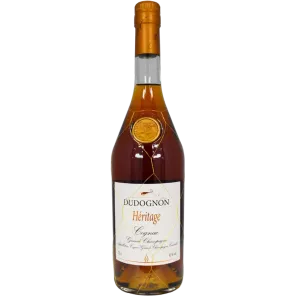
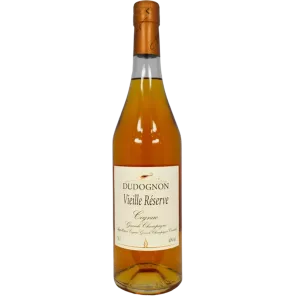
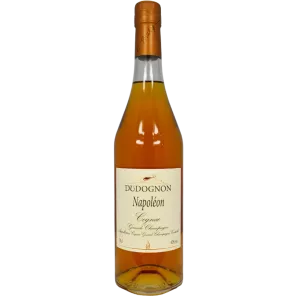
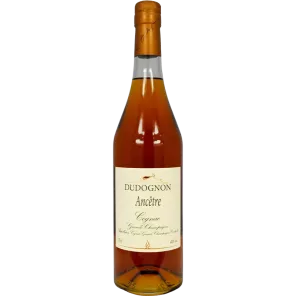
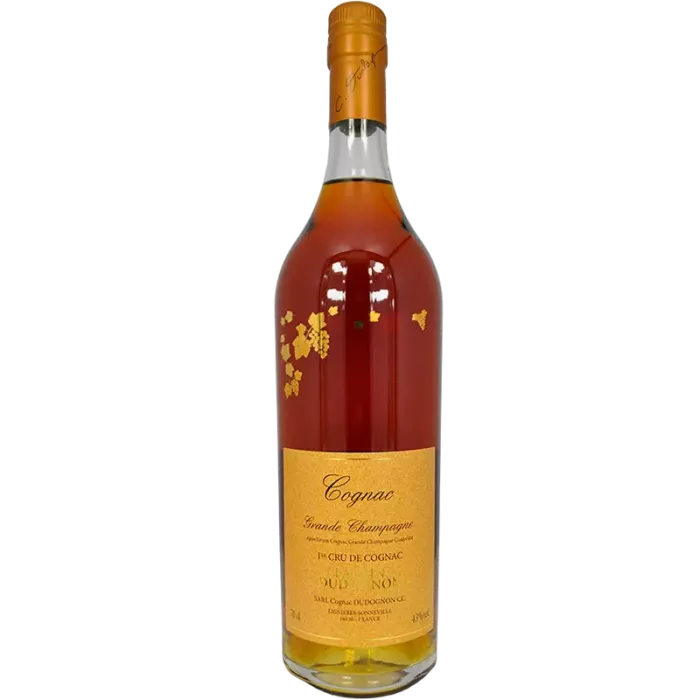
Description: Paulin Dudognon Grande Champagne Cognac - 1er Cru de Cognac | Dudognon
Paulin Cognac is the oldest brandy produced by the House of Dudognon. A family of winemakers since 1776, the Dudognons cultivate their vineyards in Lignières-Sonneville, in the heart of Grande Champagne. This is the most prized Cognac appellation, renowned for its deep chalk soils and eaux-de-vie of rare finesse. Paulin is named after the founder. It embodies the house’s ultimate legacy: a cognac aged for approximately 60 years or more, passed down through nearly three generations.
Terroir and Grape Varieties
Grande Champagne owes its name not to the wine-growing region of Champagne, but to a Latin etymology referring to an open plain. Its soils are primarily chalky limestone, deep, and well-drained. They impart to the eaux-de-vie a lightness and aromatic length that no other terroir in the Charente can match. The primary grape variety isUgni Blanc, complemented by Folle Blanche and Montils. A late-ripening variety with natural acidity, Ugni Blanc produces lean, lively base wines that are perfectly suited to double distillation.
Distillation and Ageing
Distillation is carried out via double distillation in a wood-fired pot still. This method, which is slower and more expensive than steam distillation, preserves an incomparable texture and aromatic depth. The brandy first spends about 8 months in new Limousin oak barrels before being transferred to older barrels for slow ageing. The total ageing period reaches 60 years or more. No additives: no caramel, no sugar, no wood extract. What you find in the glass is the result of time alone.
Paulin Dudognon Grande Champagne Cognac - 1er Cru de Cognac | Dudognon: The Expert Sommelier’s Review
Philippe Mischler, sommelier at Mundovin
The Paulin is a rare gem from a family-run house, not a merchant-produced cognac. Sixty years of patience in the wood, followed by ageing in the bottle for nearly three generations: few houses still maintain this level of discipline. This type of ultra-long ageing in Grande Champagne produces eaux-de-vie of a complexity that even the grand vintages of the major houses rarely achieve with such candor. With no caramel, no added sugar, and no artificial additives, Paulin Dudognon stands as the most honest and concentrated expression of what the chalky terroir of Lignières-Sonneville has to offer. It is served at 18°C in a tulip glass, without ice. This is a cognac to be savored on its own, slowly.
The nose
The nose opens with deep notes of rancio (that oxidized nutty flavor characteristic of very old cognacs aged in barrels), beeswax, and blond tobacco. Hints of dried fruit, candied apricot, and toasted almond gradually unfold. Beneath these generous layers, a subtle floral note—almost like dried roses—evokes the grape variety’s origins. The finish remains mineral and chalky, true to the terroir.
On the palate
On the palate, the attack is full-bodied and velvety, without the slightest harshness. The texture unfolds with remarkable density, the result of such a long ageing process. The underlying tension, derived from the natural acidity of Ugni Blanc, keeps the wine in balance and prevents it from becoming heavy. The finish is long and persistent, marked by notes of licorice and weathered old wood. It lingers for a long time, without being overpowering.
Grande Champagne: Everything You Need to Know About This Appellation
Grande Champagne is the first and most prestigious of the six Cognac appellations. It lies at the heart of the Charente vineyards, aroundAigre and Segonzac. Its very pure, white chalky soils give the eaux-de-vie a floral finesse and aging potential unmatched anywhere else in the region.Ugni Blanc reigns supreme here, cultivated for its natural liveliness and aromatic neutrality—qualities essential for long distillation.
Paulin Dudognon embodies the very best that Grande Champagne has to offer. The exceptionally long ageing period, the meticulous wood-fired distillation, and the absence of any additives make it a particularly pure expression of the appellation. It is a cognac of terroir, not of formula.
 en / €
 Contact


.svg)
.svg)