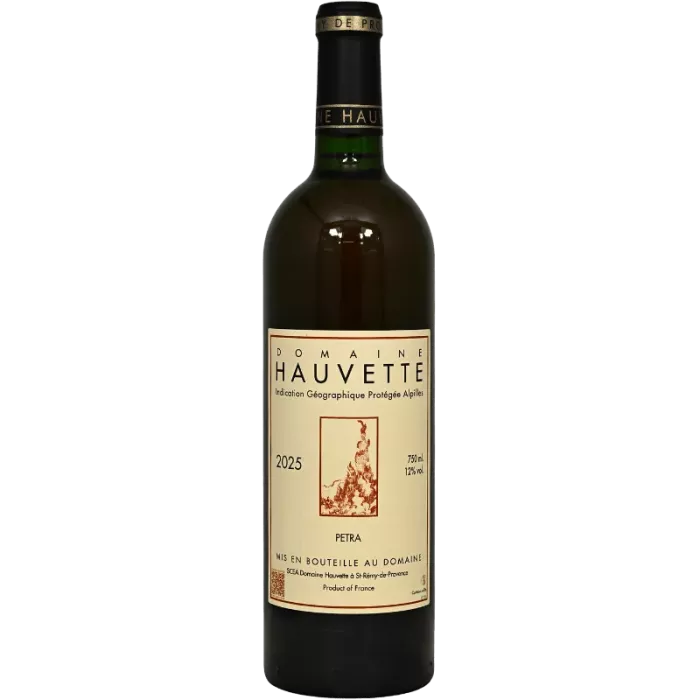
Pétra 2025 | Hauvette wine estate
Among the wines of Provence, there are a handful of rosés that defy the stereotypes often assigned to them. Pétra, Domaine Hauvette’s flagship cuvée, is one of them. Born in Saint-Rémy-de-Provence, at the foot of the northern slope of the Alpilles mountain range, it bears the signature of Dominique Hauvette, a winemaker who has been based here since 1988. Under the prestigious mentorship of Eloi Dürrbach (Domaine de Trévallon), she has built a 15-hectare wine estate in her own image: uncompromising and unpretentious. Pétra is its most direct expression as a rosé.
Terroir and Grape Varieties
The vines draw nourishment from a rocky, clay-limestone soil characteristic of the Alpilles. This soil retains moisture deep within the soil, a precious reserve that allows the vines to weather Provençal summers without water stress. The north-facing slope naturally moderates ripening. The blend is 70% Cinsault—a grape variety known for its freshness—complemented by 15% Syrah and 15% Grenache.
Viticulture and Winemaking
The wine estate has been certified biodynamic since 2003, a practice established long before the term became trendy. The vineyards are worked on horseback, yields are kept low, and the soil is treated with respect as a living environment. The grapes are harvested by hand. Pressing is done immediately, without maceration. Fermentation takes place with native yeasts in concrete egg-shaped vats, which preserve the wine’s character without oxidizing it or imparting oak flavors. Ageing lasts about a year on the lees, always in concrete eggs, with no added sulfites. A winemaking process of rare consistency, entirely dedicated to the fruit and the terroir.
Pétra 2025 | Domaine Hauvette: The Sommelier’s Review
Philippe Mischler, sommelier at Mundovin
Rosé suffers from an undeserved reputation. The image of high-yield, pale, and shallow wines overshadows, in the collective consciousness, wines of a completely different character. Pétra is one of those that sets the record straight. Featured at some of the world’s finest restaurants, this great rosé from the Alpilles stands up to comparison with the region’s most serious gastronomic whites. The wine estate has earned three stars from the Revue des Vins de France and five stars in the Bettane+Desseauve guide—accomplishments that cannot be achieved overnight. Pétra combines, with moving precision, the structural balance, refreshing minerality, and captivating fruitiness that define great table wines. It will reach its peak drinking period between 2027 and 2031, but it’s already a pleasure to drink at 10 °C, perhaps decanted for a few minutes to open up the bouquet.
The Nose
The nose opens with notes of vine peach and fresh citrus, with a light floral hint of violet. A herbaceous touch of garrigue runs through the bouquet—precise, yet never overpowering. The minerality of the clay-limestone terroir emerges in the background, discreet and persistent.
Palate
On the palate, the attack is bright and lively. The texture is round and luscious, with remarkable fluidity for a rosé of this density. The acidity maintains a constant tension that propels the wine forward. The finish is briny and long, with a slight peppery note that reflects the terroir. A wine that is both juicy and crystalline, inviting you to take another sip.
The IGP Alpilles: A Distinctive Appellation
The IGP Alpilles covers the communes of the Alpilles limestone massif in the Bouches-du-Rhône department. The clay-limestone soils, intense sunlight, and Mistral winds shape wines of singular expressiveness. For rosés, the key grape varieties are precisely Cinsault, Syrah, and Grenache—the trio that defines Pétra. The appellation produces little but well: its finest wines stand out decisively from regional standards.
Pétra embodies the finest that the Alpilles PGI has to offer in the world of rosé. Far from being a forgettable, everyday wine, it claims a place at the gourmet table. For over thirty years, the Hauvette wine estate has been its most compelling testament.
 en / €
 Contact


.svg)
.svg)