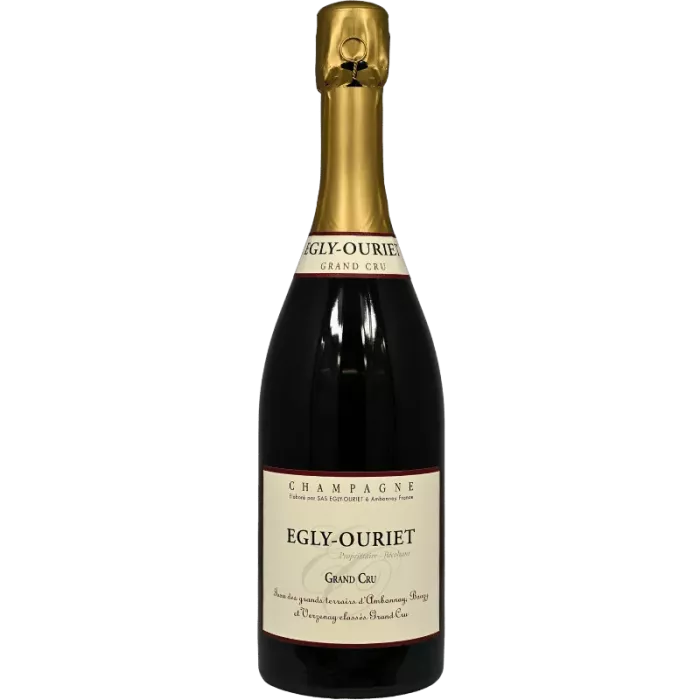
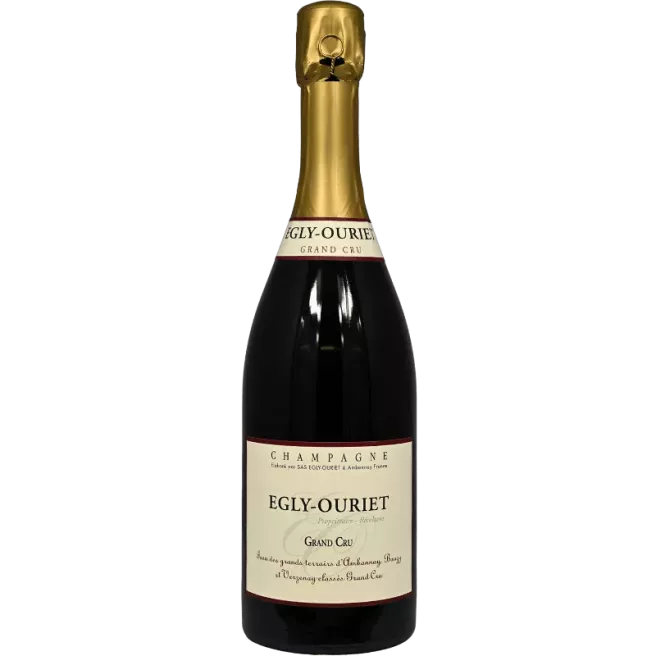
Description: Grand Cru Champagne | Egly-Ouriet
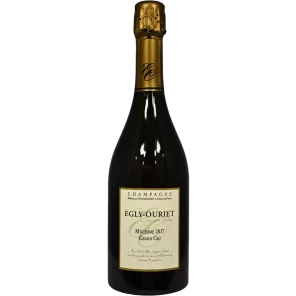
Egly-Ouriet’s Grand Cru Extra Brut Champagne perfectly encapsulates the estate’s style. This non-vintage cuvée, often highly sought after, showcases the work of Francis Egly and his son Guillaume. Their approach to Champagne prioritizes, above all, the quality of the grapes, the richness of the wine, and precision, with particular attention paid to vineyard management.
Terroirs and Grape Varieties
The blend consists of 70% Pinot Noir and 30% Chardonnay, sourced from Grand Cru-classified villages. The grapes come primarilyfrom Ambonnay, supplemented by plots in Bouzy and Verzenay. The clay-limestone soils, rich in chalk, lend the wine freshness and tension. The Pinot Noir from Ambonnay gives it body and structure, while the Chardonnay contributes finesse and freshness. A balanced blend that truly reflects the character of these three terroirs.
Viticulture and Winemaking
The estate cultivates its vineyards using practices similar toorganic farming—though without official certification—by limiting inputs and respecting natural cycles. Fermentation takes place with indigenous yeasts. About 20% of the cuvée is vinified in oak barrels; the rest in stainless steel tanks. Malolactic fermentation is avoided to preserve the wine’s natural acidity and freshness. After 12 months of aging, the champagne matures for at least 4 years on racks. It is neither fined nor filtered. The dosage, limited to 2 to 3 g/L, gives it its Extra Brut character.
Grand Cru Champagne | Egly Ouriet: The Sommelier’s Review
Philippe Mischler, sommelier at Mundovin
This champagne stands out for its style and personality. The absence of malolactic fermentation and its aging for at least four years on the lees give it freshness, tension, and depth. It can be enjoyed now, but a few years of cellaring will allow its various components to harmonize more fully. At the table, serve it at around 10 °C, immediately after opening, in elegant wine glasses.
A winemaker’s Champagne with a distinct character—vinous and precise—that showcases everything a non-vintage cuvée has to offer.
The Nose
The nose reveals lovely notes of white fruit and delicately honeyed flowers, accompanied by hints of brioche and fresh almond. A subtle note of flint rounds out this bouquet, which is both elegant and expressive.
On the palate
On the palate, the attack is clean and precise, carried by a lovely mineral freshness. The Pinot Noir provides body and structure, while the Chardonnay brings finesse and elegance. The whole remains well-balanced, with a long, briny finish that gives the champagne a wonderful gastronomic dimension.
Champagne: Everything You Need to Know About This Appellation
Champagne is a wine-growing region in northeastern France, known for its chalk-rich soils and sparkling wines. Chalk plays an important role in the vineyards: it retains water and contributes to the wines’ freshness. The main authorized grape varieties are Pinot Noir, Pinot Meunier, and Chardonnay. Champagnes are produced using a method that involves a second fermentation in the bottle, followed by aging on racks. Among the villages within the appellation, 17 hold Grand Cru status, the highest level in the Champagne hierarchy.
It is within this context that Egly-Ouriet’s Grand Cru Champagne is produced. While many champagnes are sought after for their roundness, Francis and Guillaume Egly favor wines with a vinous character and beautiful freshness. Made exclusively from Grand Cru-classified terroirs, this champagne undergoes extended aging on racks and features a limited dosage. It thus reflects the estate’s style and the importance placed on the expression of the terroir.
 en / €
 Contact


.svg)
.svg)