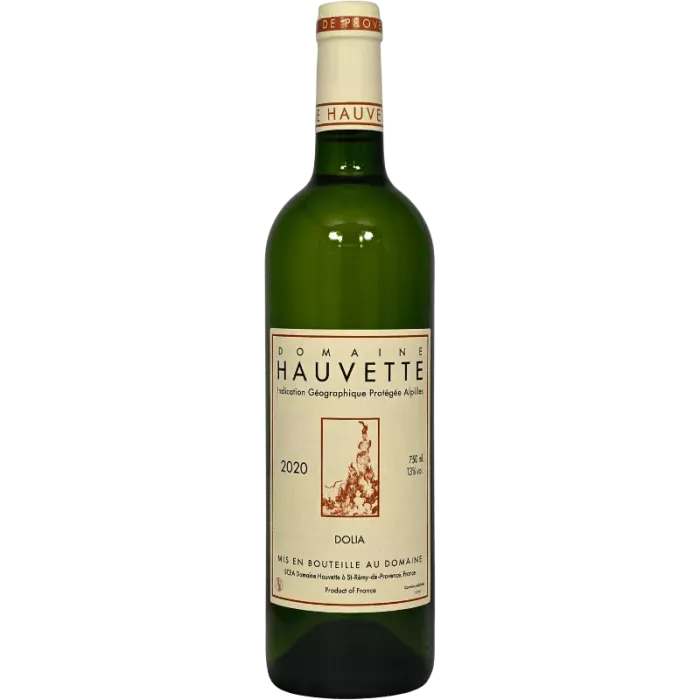
Dolia 2020 | Dominique Hauvette
The Dolia is the flagship white cuvée of Domaine Hauvette, located in the heart of the Alpilles. It embodies, better than any other, Dominique Hauvette’s unique vision: observing life, trusting it, and waiting. Twenty-five years of patience have proven that Marsanne, Roussanne, and Clairette—planted together in a mixed vineyard on the same plot—reach their ideal ripeness at the same time. The Mistral plays a major role in this, protecting the vines from intense heat and preserving the aromatic freshness of the grapes.
The name “Dolia” pays homage to the ancient terracotta jars in which wine was once made. Today, after several years of research, Dominique Hauvette conducts winemaking for this cuvée in concrete eggs, vessels considered better suited to the terroir of Les Baux-de-Provence and the local grape varieties.
Terroir and Grape Varieties
The terroir consists of rocky, clay-limestone soil that is poor and well-drained, typical of the Provençal hinterland. This soil forces the roots to dig deep and imparts to Provençal wines a dense, mineral character marked by stone. The blend consists of 40% Marsanne, 30% Roussanne, and 30% Clairette.
Viticulture and Winemaking
The wine estate is certified biodynamic. The grapes are harvested by hand, and fermentation is carried out using indigenous yeasts. Ageing lasts 12 months in concrete eggs on the lees. Then comes the long wait: 72 months in the bottle before release. This rest period is not a luxury. It is a conviction. Dominique Hauvette adjusts this duration vintage after vintage, according to what the wine dictates.
Dolia 2020 | Dominique Hauvette: The Sommelier’s Review
Philippe Mischler, sommelier at Mundovin
This wine is indomitable. It doesn’t reveal itself easily, and that’s precisely what makes it so fascinating. Six years in the cellar before it reaches your table in a bottle: that says it all about Dominique Hauvette’s relationship with time. The Dolia 2020 will reach its peak drinking period between 2026 and 2035, but it already rewards those who are patient enough to let it breathe for half an hour in a decanter at 10°C. At the table, I can easily imagine it paired with a celeriac risotto with morels, or with the minerality of a melanosporum truffle. A white wine from Provence that’s every bit as good as the great white cuvées of the Rhône Valley.
The Nose
The nose opens slowly, in successive layers. The initial aromas are vegetal and wild: lemon leaves, fennel, and dry garrigue herbs. Then notes of autolysis with slightly petrol-like accents signal the wine’s maturity. After aeration, notes of yellow peach and candied citrus zest emerge. A stony minerality runs through the entire profile, a thread that extends all the way to the bottom of the glass.
On the palate
On the palate, the attack is full-bodied, almost opulent. The mineral structure sets in immediately, powerful, with pronounced stony accents. A noticeable tannic sensation reminds us that this white wine has substance. The juicy aromas of stone fruits evoke the sun-drenched character of the Saint-Rémy-de-Provence terroir. The finish is long, driven by remarkably well-balanced acidity and noble bitterness that lingers long after the last sip.
 en / €
 Contact


.svg)
.svg)